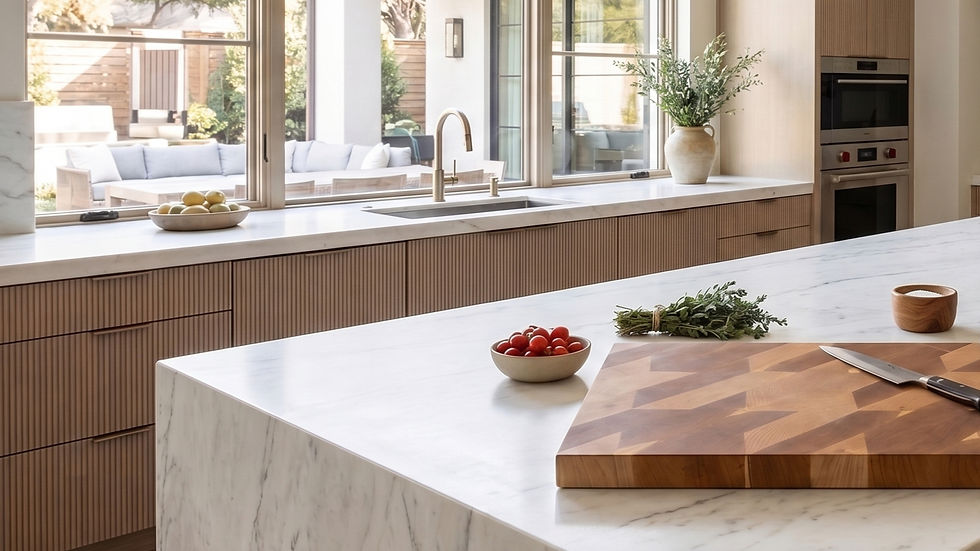
Functional Kitchen Island Styling: The Mise en Place Aesthetic

The modern luxury kitchen is a marvel of engineering. It is a symphony of surfaces such as vast expanses of Calacatta marble, sleek quartzite, and honed soapstone. It is equipped with appliances that can sous-vide, air fry, and espresso at the touch of a button. Yet, in the pursuit of this pristine perfection, many homeowners encounter an unexpected side effect. The cold kitchen.
We have all walked into a room that is breathtakingly beautiful but feels untouched. It feels like a showroom, a space where life is theoretical rather than actual. The vast island, while elegant, can feel stark, uninviting, and vast. It lacks a heartbeat. At Key Home Goods, we believe the secret to bringing warmth, soul, and functionality back into your kitchen lies in a concept borrowed from the world's finest professional kitchens: Mise en Place.
Translated literally from French, Mise en Place means "putting in place." It is the culinary religion of preparation. Gathering your tools, chopping your aromatics, and arranging your ingredients before the fire is ever lit. It is a state of readiness. But we believe Mise en Place is more than just a cooking technique. It is a design aesthetic. It is the art of organized, beautiful utility.
When applied to interior design, functional kitchen island styling via Mise en Place transforms your kitchen island from a barren landscape into a curated stage for living. It is about blurring the line between the tools we use and the art we display.
Here is your masterclass on how to style your kitchen island using the Mise en Place aesthetic, transforming everyday utility into everyday luxury.
The Lived-In Look: The Rise of Functional Kitchen Island Styling
The most stylish homes today, those gracing the pages of Architectural Digest and Elle Decor, share a common thread. They look lived in. They tell a story of abundance, hospitality, and activity. For years, minimalism dictated that we hide everything. Toasters went into appliance garages, knives went into drawers, and cutting boards were stashed in cabinets. The result was a kitchen that looked clean, but sterile.
This new kind of luxury is different. It is tactile. It embraces functional decor. Items that are beautiful enough to be left out, and useful enough to earn their real estate. A completely empty countertop says, "No one lives here." A countertop styled with purpose says, "We gather here. We create here." However, lived-in does not mean messy. It means curated. It means selecting a few high-quality, functional items and displaying them with intention. This requires a foundation.
The Anchor Piece: Why You Need a Statement
Every vignette needs a stage. On a large stone island, small items, a salt shaker, a spoon, a lemon, get lost visually. They float in the expanse of stone, looking like clutter rather than decor. To create a purposeful zone, you need an object with mass and gravity to ground the space.
This is the role of the kitchen anchor.
The Physics of the Anchor
Why does a cutting board work as an anchor? It comes down to texture and scale.
Texture Layering: Most luxury kitchens feature stone countertops. Stone is cold, hard, and often glossy. Wood is warm, soft, and matte. By placing a substantial cutting board on top of marble or quartz, you create immediate visual tension and balance. The wood softens the stone.
Defining the Zone: The board creates a frame. It defines a specific area of the island as the prep zone. When you place items on the board, they are styled. When you place them directly on the counter, they often just look like they were left out.
But not just any board will do. A thin, plastic sheet or a lightweight edge-grain board lacks the gravitas required for a permanent display. It needs to be end-grain.
The End-Grain Difference: An end-grain board, like The Statement, is constructed with the wood fibers facing vertically. This houndstooth pattern creates a texture that is visually complex and engaging. It is not just a slab of lumber, it is a mosaic.
Heft as Luxury: The Statement weighs between 18 and 22 pounds. This weight is critical. It signals permanence. It tells the user (and the viewer) that this object belongs here. It is a fixture, not an accessory.
Functional Styling: The Art of the Vignette
Once your anchor is in place, styling it becomes a simple exercise in the designer's Rule of Threes. The human eye finds odd numbers of items to be more natural and balanced than even numbers. To create a Mise en Place vignette that feels curated but functional, you want to combine items of varying height, texture, and utility.
The Styling Recipe
Here is the essential breakdown for functional kitchen island styling components:
Component | Role | Suggested Items |
The Base | The Anchor | The Statement Board (Walnut for light kitchens, Maple for dark). |
The Vertical | Adds Height | A ceramic crock filled with vintage wooden spoons, or a tall, sculptural bottle of premium olive oil (e.g., Brightland or a ceramic cruet). |
The Texture | Adds Contrast | A small bowl of flake salt (marble or olive wood) or a folded Belgian linen tea towel. |
The Life | Adds Vibrancy | A small potted herb (rosemary, basil), a bowl of lemons, or a head of purple garlic. |
Step-by-Step Styling
Position the Anchor: Place your cutting board off-center on your island, or centered if you have a sink. Ensure it is near the working side of the kitchen but visible from the living area.
Establish Height: Place your tallest item (the crock or oil bottle) in the back corner of the board. This draws the eye upward and prevents the display from looking flat.
Layer Texture: Place your salt cellar or small pinch bowl in the foreground. Drape a linen towel casually over the corner of the board or fold it neatly underneath the salt cellar.
Inject Life: Add your organic element. If you are hosting a dinner, this might be a pile of fresh heirloom tomatoes. If the kitchen is resting, a small pot of thyme or a wooden bowl of citrus adds a pop of color that signals freshness.
The Invitation to Cook
There is a powerful psychological shift that happens when you style your Mise en Place board. It is the transition from passive to active. When your kitchen is set, when the board is out, the knife is ready, and the oil is within reach, the barrier to entry for cooking vanishes. You are no longer opening cabinets, digging through drawers, or clearing space to start dinner. The kitchen extends an invitation.
It says, "Create something."
This is functional luxury. It is the concept that the objects we surround ourselves with should not only be beautiful to behold, but should elevate our daily routines.
The Barrier Removal: Psychologically, seeing the tools of the trade laid out reduces the activation energy required to cook. It makes the process feel like a ritual rather than a chore.
The Social Signal: To your guests, a styled Mise en Place board signals that you are a capable host. It implies that fresh food is a priority in this home. It sparks conversation.
Seasonal Swaps: Keeping the Anchor Fresh
The beauty of the Mise en Place aesthetic is its flexibility. While your Key Home Goods board remains the permanent fixture, the heirloom piece that ages gracefully with your home, the supporting cast can change with the seasons. This allows you to refresh the look of your entire kitchen without a major overhaul.
Spring: The Awakening
The Vibe: Fresh, Green, Crisp.
The Styling: Pair your board with a glass cruet of light olive oil. Use a white ceramic bowl filled with green apples or artichokes. Add a small vase of tulips or forced narcissus.
The Fabric: Crisp white linen or a pale blue gingham towel.
Summer: The Mediterranean
The Vibe: Warm, Vibrant, Zesty.
The Styling: Style with a large wooden bowl of lemons and limes. Add a pot of fresh basil (essential for summer caprese). Keep a bottle of balsamic glaze handy.
The Fabric: A striped bistro towel in navy or red.
Autumn: The Harvest
The Vibe: Cozy, Earthy, Rich.
The Styling: Add a cluster of small gourds or pumpkins. Swap the salt cellar for a darker wood or copper vessel. Display a rustic loaf of bread wrapped in paper.
The Fabric: A heavy, oatmeal-colored linen or a tea towel in burnt orange or sage.
Winter: The Hygge
The Vibe: Intimate, Warm, Glowing.
The Styling: Layer your board with candles. A copper vessel with a pine or cedar scent works beautifully. Display a bowl of walnuts (in their shells) with a nutcracker. Keep a bottle of red wine and a corkscrew on the board, ready for the evening.
The Fabric: A dark charcoal or plaid flannel towel.
A Legacy on Your Counter
In the end, functional kitchen island styling is about more than just decoration. It is about claiming the space. It is about taking a large, cold surface and making it human.
The cutting boards we make at Key Home Goods are designed to be the foundation of this transformation. They are built to be used, scarred, and loved, yet beautiful enough to anchor the room when the cooking is done. It is the ultimate expression of Mise en Place, and that place is right in the heart of your home.
Ready to transform your kitchen and find the perfect anchor for your culinary life? Discover your piece today. Cheers!