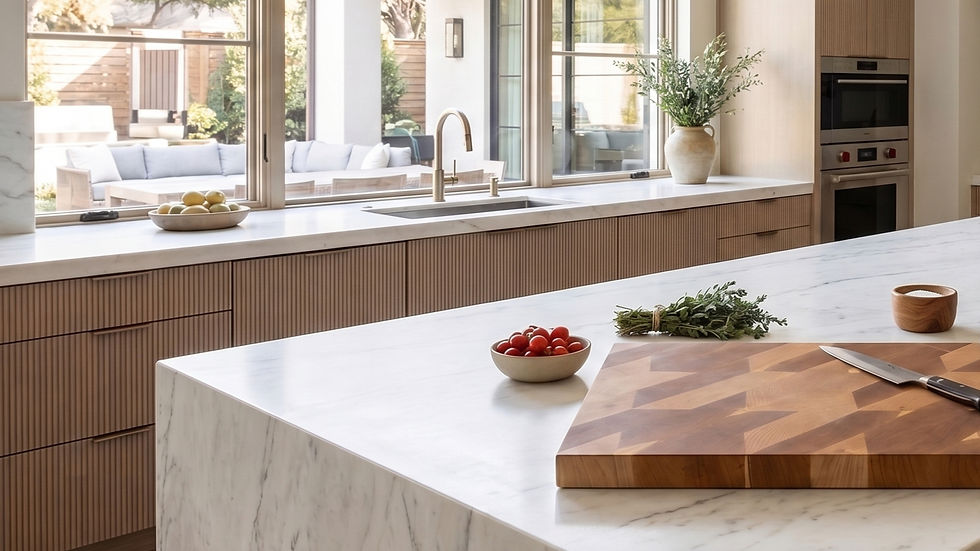
The Future of Luxury: Japandi and Wabi-Sabi Kitchen Trends for 2026

Japandi Luxury Kitchen Trends 2026: The Cultural Paradigm Shift
Japandi luxury kitchen trends in 2026 are defined by a shift toward imperfect perfection, blending Scandinavian functionalism with the Japanese philosophy of Wabi-Sabi. This movement prioritizes restorative well-being through biophilic design, utilizing heirloom wood products as high-status markers of authenticity. By integrating tactile materials and invisible technology, the 2026 kitchen becomes a sensory sanctuary that reduces stress and fosters deep environmental stewardship.
The trajectory of interior architecture in 2026 indicates a fundamental departure from the cold, industrial minimalism that dominated the early 21st century. The contemporary luxury consumer is no longer satisfied with pretty furniture or superficial eco-labels. There is a growing demand for a modern organic home that fosters peace, productivity, and a tangible connection to the natural world. This transition is anchored in the fusion of two distinct but complementary philosophies: the Scandinavian concept of hygge and the Japanese principle of wabi-sabi.
Japandi design acts as the aesthetic solution to a world increasingly saturated by digital interfaces and synthetic materials. It provides a philosophy of living that finds comfort in simplicity and beauty in the marks of time. Within the 2026 kitchen, this manifests as an atmosphere of serene silence, where cabinets unify with living spaces and technology remains hidden to preserve the room's emotional resonance.
This movement emphasizes subtle atmosphere and minimalist lines that meet artisanal craft. In this context, the kitchen island is no longer a fixed installation but a furniture-inspired sculptural centerpiece, often featuring fluid geometry and organic forms that enhance spatial flow. The use of raw, heavy materials like granite, stone, and massive wood bases provides a tactile grounding that contrasts with the transparency of textured glass and the precision of smart technology.
2026 Kitchen Design Pillars | Manifestation of Japandi & Wabi-Sabi | Philosophical Impact |
Material Synergy | Pairing wood with bold-veined marble and textured glass. | Balancing traditional craftsmanship with geological narratives. |
Fluid Geometry | Curved islands, waterfall countertops, and soft edge profiles. | Mimicking the organic flow and rhythms of the natural world. |
Invisible Technology | Sensor-activated hidden storage and voice-controlled lighting sequences. | Prioritizing intentionality and human habit over mechanical display. |
Atmospheric Palettes | Earthy tones like cedar, charcoal, and indigo paired with warm neutrals. | Promoting psychological calm and visual rest points. |
The Philosophy of Wabi-Sabi and the Mastery of Imperfection
Wabi-Sabi, rooted in 16th-century Japanese tea ceremony traditions, is the celebration of imperfection, impermanence, and the incomplete. It is an aesthetic that finds dignity in the weathered, the asymmetrical, and the authentic. In the context of luxury woodcraft, this philosophy redefines the concept of perfection. While mass production seeks to eliminate every knot and grain variation to ensure uniformity, the Japandi artisan views these features as the soul of the material.
The Wabi-Sabi influence on 2026 kitchen trends insists on character achieved through wear. This creates a living interior where surfaces are resolved into a presence that welcomes rustic expressions. The wood's inherent beauty, its distinctive grain patterns, shifting colors, and tactile irregularities, provides visual interest without the need for applied ornamentation. Every board becomes a meditation on materiality, reflecting a deep respect for forest ecosystems and the regenerative harvesting methods that produced the timber.
Signatures of Nature vs. Industrial Defects
At Key Home Goods, the natural variations in a charcuterie board are not defects to be sanded away. They are signatures of nature that represent the tree’s history and resilience. This transforms a utilitarian object into a bespoke piece of functional aesthetic decor that serves as a marker of taste and environmental awareness.
The Concept of Signatures of Nature
While industrial manufacturing categorizes organic variations as "defects," the 2026 luxury paradigm reclassifies them as Signatures of Nature. These marks, including knots, unique grain swirls, and chatoyancy, serve as a biological record of a tree’s history. In a market saturated with synthetic uniformity, these signatures act as a biometric marker of authenticity, ensuring that no two pieces can ever be identical.
Artisans like George Nakashima pioneered the framing of these natural marks as essential elements of a tree’s destiny. A knot is not a flaw, it is a record of a branch reaching for light. By preserving these free edges and internal processes, the craftsman creates a piece that lives and breathes. Offering the owner the privilege of caring for a living entity rather than a disposable commodity.
Technical Mastery: The Precision of Minimalist Forms
The achievement of minimalist perfection in a Japandi context requires a higher level of technical mastery than more ornate styles. When there is no decoration to hide behind, the joinery, the proportions, and the finish must be flawless. This organic minimalism demands that the form serves as a canvas for the wood's natural character, requiring the woodworker to act with special intensity and concentration.
High-end woodworking for the 2026 home utilizes specialized techniques where each joint follows a precise, hand-fitted order. These methods are not merely structural, but are integral to the aesthetic. This mastery ensures that the product is universal, utilitarian, and real, responding to the unique material advantages of a specific board.
Technical Mastery in Minimalism | Artisan Implementation | Impact |
Through-and-Through Cutting | Milling logs to preserve natural forms and irregularities. | Redefines perfection as a manifestation of the divine. |
Precision Joinery | Using exact,specialized techniques. | Demonstrates a rejection of 20th-century egoism and mass-production. |
Material Honesty | Aligning visual appearance with tactile properties. | Creates cognitive ease and a state of neurological trust. |
Hand-Rubbed Finishing | Applying multiple layers of oil by hand to allow the wood to breathe. | Enhances the living quality and tactile luxury of the piece. |
The Science of Tactile Cognition and Human Well-Being
The appeal of natural wood in the 2026 kitchen is deeply rooted in tactile cognition. The applied science of how our physical bodies and sense of touch shape our consciousness and connection to the world. Touch is the primary tool for connection and understanding. Every material has a voice that our bodies understand instinctively. A rough, unfinished wood plank speaks of resilience, while a polished surface communicates precision.
Scientific research into the tactile experience of wood surfaces reveals that humans perceive natural and smooth wood more positively than coated or synthetic surfaces. Touching real wood activates the parasympathetic nervous system, which is responsible for rest and relaxation. This neurochemical response is vital in the modern home to counteract the emotional coldness of synthetic materials like quartz, laminate, and stainless steel.
Neurobehavioral Benefits of Natural Wood Surfaces
Physiological Metric | Impact of Touching Real Wood | Scientific Context |
Prefrontal Cortex Activity | Significant decrease in oxy-Hb concentration. | Indicates physiological relaxation and calming of brain activity. |
Cortisol Levels | Reductions in the primary stress hormone. | Exposure to natural materials supports effective recovery. |
Oxytocin Release | Promotes feelings of bonding and security. | Foundational for developing security and relational bonds. |
Parasympathetic Response | Increases High-Frequency (HF) heart rate variability. | Induces a state of relaxation and groundedness. |
Tactile Grounding for Neurodivergent Wellness
The biophilic integration of real wood provides more than just aesthetic value; it serves as a critical tactile anchor for neurodivergent individuals, including those with ADHD or sensory sensitivities. The passive grounding provided by a hand-rubbed wood surface reduces cognitive load and anxiety by activating the parasympathetic nervous system. Unlike synthetic quartz or laminate, which can feel acoustically cold, natural timber promotes physiological relaxation and lowers cortisol levels.
Stewardship of the Natural
A central tenet of the Japandi kitchen is the use of finishes to enhance the wood’s living quality. In contrast to synthetic finishes like polyurethane or epoxy, oils (such as mineral oil) do not seal the wood under a plastic-like layer. Instead, they penetrate the fibers, hydrating the pores while leaving the surface breathable.
Synthetic finishes are renowned for their durability, but come with significant environmental and health costs. They often emit high levels of volatile organic compounds (VOCs), contributing to indoor air pollution and potential respiratory issues. Furthermore, synthetic mimicry (such as plastic laminate) creates cognitive dissonance because the visual appearance of wood grain does not match the cold, artificial feel of the surface.
Hygroscopic Stability and Moisture Buffering
Wood is naturally hygroscopic, meaning it continuously interacts with the humidity of its environment by absorbing and desorbing moisture. Hygroscopic Stability is the ability of a material to regulate these changes without warping or cracking. Oil finishes are vapor-open, allowing for moisture buffering that can attenuate fluctuations in indoor relative humidity.
Research indicates that moisture buffering in surface materials plays a critical role in understanding the risks for biological growth, such as mold. By using breathable natural finishes, the 2026 kitchen maintains an indoor RH within the healthy 30–70% range, enhancing both the structural integrity of the home and the health of its inhabitants.
Technical Performance | Oil Finish | Synthetic Polymer (Poly/Epoxy) |
Composition | Mineral oil. | Petrochemical-based compounds. |
Hygroscopic Action | Breathable; allows moisture regulation. | Robust moisture barrier; non-breathable. |
VOC Profile | Low to zero emissions.. | High VOCs; environmental/health risks. |
Maintenance | Requires frequent monthly upkeep. | Durable; requires less frequent maintenance. |
Restoration | Simple hand-rubbed spot repairs. | Buffing/recoating often requires full sanding. |
The 2026 Regulatory Landscape: PFAS-Free Kitchens
The shift toward safe oils is not only aesthetic but regulatory. Beginning January 1, 2026, multiple states including Colorado, Maine, Minnesota, and Washington have enacted prohibitions on intentionally added PFAS (per and polyfluoroalkyl substances) in consumer products, including cookware and surface treatments.
These forever chemicals are commonly found in traditional synthetic waterproofing agents and non-stick coatings. Luxury brands in 2026, such as Key Home Goods, prioritize PFAS-free oil finishes that meet rigorous safety standards. This ensures clean air in the home, protecting the family’s health while future-proofing the value of the kitchen tools.
Navigating the 2026 PFAS-Free Regulatory Landscape
These new state prohibitions on forever chemicals (PFAS) have fundamentally changed how kitchen surfaces are treated. While traditional synthetic coatings often utilize these waterproofing agents, the shift toward PFAS-free oil finishes is now a requirement for the health-conscious luxury consumer. By utilizing vapor-open, oil finishes, we ensure that the kitchen remains a low-VOC environment, protecting indoor air quality while allowing the wood to maintain its natural hygroscopic stability.
Embracing the Soul of the 2026 Kitchen
The kitchen of 2026 is moving away from the sterile and toward the soulful. By embracing the Japandi philosophy, we recognize that true luxury isn't found in mass-produced uniformity, but in the fallen majesty of natural materials that breathe and age alongside us. Whether it is the calming effect of hand-rubbed cherry wood on the nervous system or the ritual of monthly oiling, these pieces offer a sanctuary of focus in a digital world. Choosing a Key Home Goods board is more than a design choice. It is a commitment to a life of stewardship, authenticity, and the quiet beauty of imperfection. Cheers!
FAQ
Inquiry | Technical Guidance | Philosophical Implication |
How frequently should I oil my board? | Monthly application of food-safe mineral oil or board wax is essential. | It is a meditative ritual that honors the board as a living entity. |
Can oil finishes withstand heavy use? | Yes, modern formulations offer improved abrasion and moisture resistance. | Character marks from heavy use add a desirable Wabi-Sabi patina. |
What if my board gets scratched? | Wood surfaces can be rejuvenated. When buying a board, check to see if the company offers rejuvenation services. | Encourages stewardship and repair rather than disposability. |
Why choose wood over plastic for hygiene? | Wood has natural tannins and low porosity that inhibit bacterial survival. | Scientific reality counters the myth that plastic is safer than wood. |
How does minimalist joinery affect durability? | Wood-to-wood joinery allows the piece to expand and contract as one unit. | Rejects mechanical fasteners for a more organic, permanent structure. |
About the Author
The creation of a truly minimalist wooden form is a rejection of the speed and superficiality of modern life. For Andrew Key, the Founder of Key Home Goods, every piece begins with a lumber selection and responsibility. An understanding that we are dealing with a fallen majesty rather than an inanimate object. This design approach mimics the inner core development of a tree, where every board has exactly one ideal use that must be uncovered through study and intuition.
Achieving the perfection of a minimalist board requires a special intensity of manual skill. The hand-rubbing of an oil finish is not a task that can be automated. It requires the sheer joy of doing and the patience to allow the finish to penetrate the wood properly. This path respects the marks of individuality in the wood, viewing them as a record of a piece to be well-loved.
From our workshop serving the Dallas, TX luxury market, we implement a strict production cap of only 500 boards per year to maintain this level of uncompromising quality. This allows for a level of precision assembly and timber seasoning that is impossible in mass-market production. We believe that a board is not just a tool. It is a sanctuary of focus that brings the sensitivity, peace, and harmony of the forest into your home.
The result is a piece that is universal, utilitarian, and real. A bridge between the human hand and the divine architecture of nature. By choosing a Key Home Goods board, you are not simply purchasing a surface; you are entering into a lifelong stewardship of a living entity, one that will grow more beautiful and full of character with every meal you prepare.