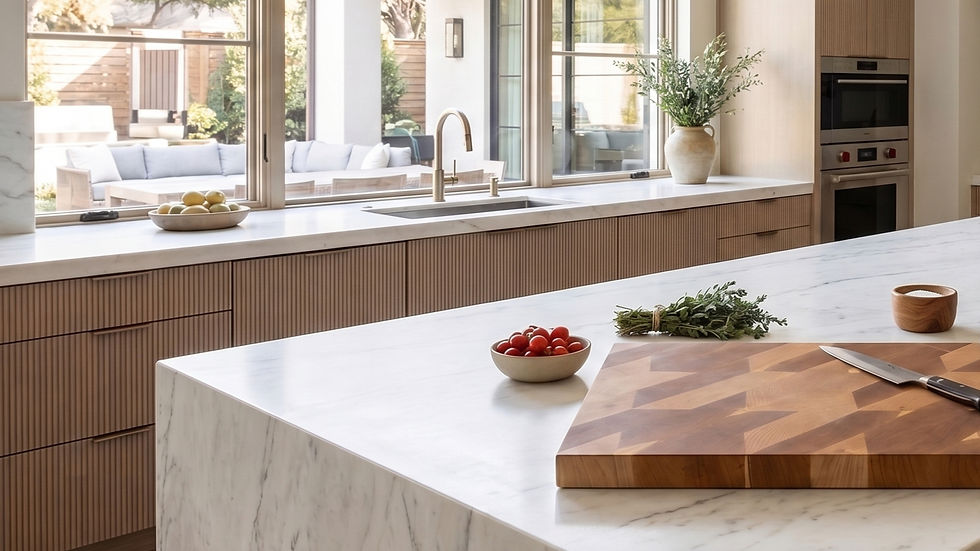
The Definitive Guide to Luxury End-Grain Wood Cutting Boards

In the modern kitchen, true luxury is found in the uncompromising quality of the most essential daily objects. Luxury end-grain wood cutting boards represent the pinnacle of this philosophy, standing as the foundational starting point for every culinary endeavor. Far from being a mere tool, a masterfully crafted board acts as a permanent fixture that establishes the quality standard for the entire space, transforming a functional object into a piece of fine art.
This transformation defines the new high-end segment of kitchenware. For the discerning consumer, these boards are not an expense, but an investment designed to age gracefully and adapt effortlessly to sophisticated living. Whether serving as a presentation centerpiece for charcuterie or providing a stable station for gourmet preparation, the inherent multifunctionality of a Key Home Goods piece is the quiet signature of true luxury.
The true distinction of an investment-grade board lies in the uncompromising mastery applied to its creation. At Key Home Goods, we believe luxury resides in the process: the absolute control over the wood’s stability, the structural integrity of its core, and the artistry of its canvas. The following analysis explores the three pillars, The Kiln, The Core, and The Canvas, that elevate a hardwood board beyond high-end functionality into the realm of a lasting culinary legacy.
The Kiln: Why Dimensional Stability is Critical for Luxury End-Grain Wood Cutting Boards
The Silent Marker of Quality
The wood cutting board is a natural material that constantly reacts to changes in its surrounding environment, expanding and contracting with fluctuations in humidity and temperature. The most significant structural failure point in non-luxury boards is almost always rooted in improper preparation, specifically the failure to achieve true dimensional stability. When wood possesses an excessively high moisture content, it is guaranteed to move after construction, inevitably resulting in warping, cracking, or splitting. For a luxury item designed to be used daily and treasured for decades, guaranteeing this stability is non-negotiable.
To counter this natural movement, Key Home Goods employs processes that ensure the wood is structurally ready for its demanding environment. This preparation is meticulous and lengthy, setting apart premium, custom woodworking from mass-produced alternatives. The ultimate goal is to balance the wood's internal moisture with the expected humidity of an interior environment, a process known as achieving Equilibrium Moisture Content (EMC).
Kiln-Drying as a Heritage Imperative
The technical requirement for wood used in heated, indoor environments, such as a modern kitchen, is a precise moisture content typically ranging from 6% to 8%. Achieving this low, consistent moisture level is the role of kiln-drying, a controlled process that involves drying the lumber in a specialized kiln over a period of days or even weeks. This is not merely an industrial step, it is a critical calibration that ensures the wood's structural integrity before any cutting or joining begins.
The careful regulation of temperature, humidity, and airflow within the kiln prevents the wood from developing defects like cracking or warping, making it perfectly stable and durable for crafting. By employing this meticulous, specialized process, we practice the necessary material preparation that guarantees a superior product designed to stand the test of time.
The Artisan's Advantage: Unlocking the Wood's Integrity
The need for artificial drying methods, such as kiln-curing, stems from the wood’s physiology. Raw timber holds a massive amount of water that air-drying methods simply cannot fully remove. When a tree is felled and sawn, the dead wood cells react to drying conditions by attempting to shut water inside, functioning as they would during a drought.
High-volume, cheaper boards often rely on less controlled air-drying, which fails to penetrate and release all the internal moisture. True luxury woodworking; however, uses techniques that begin by adding water and heat to create vapor. This vapor permanently opens the pores of the wood cells, allowing for efficient, deep drying. This sophisticated preparation method, recognized by furniture makers as far back as the 19th century, ensures that the wood achieves the precise 6% to 8% moisture content required to prevent expansion and contraction in a climate-controlled home.
Performance Defined: Hardness, Porosity, and the Preservation of Cutlery
The Janka "Goldilocks Zone" (900-1500 lbf)
The performance of a premium cutting board is not merely judged by its durability, but by its ability to protect other high-value culinary investments. Specifically, expensive knife sets. The hardness of wood is quantified using the Janka scale, which measures the force required to embed a steel ball half its diameter into the wood.
A common misjudgment is that maximal hardness equates to optimal quality. In fact, a board that is excessively hard (e.g., above 2,000 pounds-force, or lbf) acts like stone or metal, unforgivingly dulling a knife's edge with every cut. Conversely, a board that is too soft will quickly accumulate deep grooves, creating unsanitary surfaces. The ideal structure must balance durability with blade preservation. This "Goldilocks zone" for cutting board performance is precisely defined as a Janka hardness rating between 900 lbf and 1,500 lbf. This sweet spot ensures the surface is gentle enough to maintain knife sharpness while simultaneously resisting damage from regular, rigorous use.
At Key Home Goods, we utilize premium hardwoods that naturally fall within this performance bracket, justifying our selection with objective data. Walnut, with a rating around 1,010 lbf, and Cherry, near 950 lbf, hit this mark perfectly, while Maple, often considered the industry standard for durability, rates around 1,450 lbf. This precise calibration ensures that the board is designed to complement and protect your culinary tools. Transforming the cutting surface into an extension of your high-end cutlery investment.
Closed-Grain: The Hygiene and Moisture Defense
Beyond hardness, the microstructure of the wood, its porosity, is a critical factor in determining food safety and long-term structural integrity. Porosity refers to the size of the wood's internal pores. If the pores are large, the wood is classified as open-grain, which makes it highly susceptible to absorbing moisture, harboring bacteria, and leading to structural failures like warping and cracking.
True luxury boards; therefore, are exclusively crafted from woods with small pores, known as closed-grain structures. Closed-grain woods provide natural resistance to moisture absorption and bacterial growth, promoting exceptional hygiene. Maple, for example, is highly valued not only for its hardness, but also for its tight grain structure. Which when combined with its natural antimicrobial properties, makes it the gold standard for high-volume use. This focus on closed-grain woods provides assurance that the board’s long-term hygiene is engineered into the very cellular structure of the material.
Optimal Hardwood Performance Metrics
The table below translates these technical specifications into direct benefits:
Hardwood Property | Key Home Goods Luxury Standard | Benefit to the User | Wood Species |
Janka Hardness (lbf) | 900 - 1,500 | Preserves the sharpness of high-end knives, resists deep gouging | Maple (1450), Walnut (1010), Cherry (950) |
Porosity/Grain Structure | Closed-Grain (Low Porosity) | Exceptional hygiene, naturally resists moisture absorption and bacterial harbor | Maple, Cherry, Walnut |
Moisture Content (%) | 6% - 8% (Kiln-Dried) | Guarantees dimensional stability, prevents cracking, splitting, and warping | Maple, Cherry, Walnut |
The Core: The Signature of the Artisan
Beyond Appearance: A Structural Deep Dive
The architecture of a cutting board is as important as the material selection itself. How the wood fibers are oriented on the surface fundamentally determines the board’s performance, longevity, and overall cost. Wood fibers can be oriented in three ways: face-grain (the wide, beautiful face, but structurally weakest), edge-grain (the long side of the fibers, offering a balance of strength and price), and end-grain (the fibers standing upright, offering superior performance).
For true luxury and durability, end-grain construction is the non-negotiable choice. While end-grain boards require complex joining and precision and are often significantly more expensive than their edge-grain counterparts, they provide the maximal longevity and knife protection. They are built to last for decades, positioning them as the most economical choice over the long term and solidifying their status as kitchen heirlooms. This structural complexity directly justifies the higher valuation. At Key Home Goods, we choose the path of maximum technical challenge to deliver maximum customer benefit, upholding our promise of masterful craftsmanship.
The Microscopic Defense System: Protecting the Blade
The core advantage of end-grain lies in its unique microscopic structure. When viewed closely, the wood fibers are arranged vertically, much like a microscopic bamboo forest or thousands of tiny, tightly packed brush bristles.
This vertical alignment defines knife preservation. When a premium knife contacts an end-grain surface, the blade slides between these vertical fibers rather than cutting across the horizontal structure found in edge-grain boards. This action dramatically reduces friction, wear, and tear on the knife edge, helping to keep steel blades sharper for considerably longer. This specialized construction is an essential feature for the culinary professional and the homeowner who invests heavily in precision cutlery.
Self-Healing and Perpetual Hygiene
The superior longevity of the end-grain block is attributed to its remarkable resilience. A quality often described as self-healing. The vertically aligned fibers absorb the impact of the knife more readily than other constructions. Following a cut, these fibers naturally begin to close back up, particularly when the board is properly maintained and wiped down with a damp cloth.
This self-healing property prevents the deep, permanent scarring that is common on softer, or less robustly constructed, boards. Because deep grooves harbor moisture and bacteria, the end-grain board's ability to maintain a smooth, pristine, and hygienic surface for years is a fundamental component of its luxury value.
The Defining Difference: End-Grain vs. Edge-Grain Construction
The decision between end-grain and edge-grain is central to the luxury promise. This distinction determines not only the board’s performance but also its value and lifespan:
Feature | End-Grain Construction | Edge-Grain Construction | Luxury Implication |
Knife Protection | Superior (Knife slides between vertical fibers like "brush bristles") | Good (Knife cuts across horizontal fibers) | Protects investment-grade cutlery |
Durability / Longevity | Excellent (Self-healing fibers, lasts for decades) | High (Durable, but shows cuts more readily) | Heirloom quality and investment value |
Aesthetic | Premium and proprietary patterns (higher complexity) | Clean, horizontal lines (often more uniform) | Centerpiece-worthy functional art |
Cost / Crafting Time | Highest (Requires complex assembly and precision craftsmanship) | Lower (Simpler construction) | Investment piece status, artisanal dedication |
The Canvas: The Aesthetic Command of Figure, Grain, and Visual Harmony
The luxury cutting board transcends utility. It is a permanent functional accessory that enhances the kitchen’s design narrative. These pieces, crafted from woods like rich Walnut or warm Maple, contribute essential warmth and texture to typically cool or sterile kitchen palettes. Seamlessly integrating into various styles from contemporary to farmhouse.
The board serves as a canvas for culinary presentation. Its warmth and finished surface are perfectly suited for charcuterie or display, elevating the act of hosting into an effortless and cohesive experience. The selection of a premium board, therefore, is a choice to invest in visual harmony. A tool that is perpetually worthy of being on display, defining the space even when not in use.
Spotlight on Scarcity: The Rare Figured Grains
Luxury demands uniqueness, and nothing underscores this principle better than the presence of rare, figured grain patterns. These irregular fiber structures create profound visual drama and ensure that each piece is genuinely one-of-a-kind, turning the wood surface into a singular work of art.
Among the most exclusive figures are Birdseye and Curly Maple. Birdseye, found almost exclusively in Hard Maple (Acer saccharum), is a rare phenomenon. This pattern is characterized by small, round knots that resemble a bird's eye, creating a speckled, often holographic effect. Similarly, Curly or Quilted grain features a wavy or rippled appearance. Because these materials are highly sought after for instrument making, luxury furniture, cabinetry, and bespoke items, they bring an elevated and unique touch to the kitchen.
Integrity of Sourcing: Ethical Excellence
The commitment to luxury extends beyond aesthetics to ethical stewardship. A truly premium brand must ensure the integrity of its supply chain, particularly when sourcing hardwoods like Walnut, Maple, or exotic varieties. Consumers require transparency and demand that their indulgences carry integrity.
This necessitates responsible sourcing, often involving partnerships with certified suppliers who adhere to sustainable forestry practices. By guaranteeing the ethical and sustainable provenance of the raw material, we assure our customers that their investment supports ecological balance. This focus on compliance and ethical practice is a mandatory element of our mandate, where indulgence is inextricably linked to integrity.
The Final Touch: Hand-Finishing and the Ritual of Preservation
The journey from kiln-dried lumber to a bespoke cutting board culminates in the finishing process. A stage that requires extraordinary precision and time. The hallmark of genuine luxury woodworking is the meticulous preparation of the substrate, a process that can involve hours of precise sanding to eliminate any defects before the first coat of oil is applied. Any imperfection, however slight, would be amplified by the oil.
Furthermore, the application of oil must be conducted in a highly controlled environment, ideally near-dust-free, underscoring the specialist, multi-step execution that differentiates artisanal goods from mass-produced items. The final surface is achieved through hand-rubbed, food-safe oil application. This step serves the dual purpose of providing critical protection against moisture and daily wear while dramatically highlighting the wood's natural grain and character. This hand-applied finish is the final layer of artisanal dedication, solidifying the board’s status as a handcrafted treasure.
Investment Protection: The Ritual of Care
A luxury item is built to last decades, but its longevity depends on the owner's participation. The required care, hand-washing and periodic oiling, should be viewed not as a burden, but as an essential, mindful ritual that reinforces the bond between the owner and object.
Proper maintenance allows the board to develop a rich patina. A desirable aging process that tells the story of the kitchen and contributes to its value as an heirloom. Preserving this perfection requires adherence to critical mandates. The intense heat, air, and pressure of a dishwasher are detrimental to wood, causing fibers to swell and resulting in warping and cracking; therefore, hand-washing is mandatory. Additionally, the board must never be soaked in water for extended periods. By integrating this ritual of care, the owner ensures their piece maintains its pristine, hygienic condition and its structural integrity for generations.
Where Craftsmanship Meets Culinary Legacy
True luxury is built on the mastery of hidden, technical details that ensure enduring quality. At Key Home Goods, we set our uncompromising standard by adhering to three pillars of excellence:
The Kiln: Guaranteeing absolute dimensional stability by meticulously curing wood to the precise 6% to 8% EMC required for heirloom-grade construction, preventing warping and cracking.
The Core: Utilizing the superior performance and resilience of end-grain construction, calibrated to the optimal 900 lbf to 1,500 lbf Janka Zone, ensuring superior hygiene and extending the life of high-end knives.
The Canvas: Curating aesthetic excellence through the inclusion of rare figured wood like Curly Maple, finished with meticulous, multi-stage hand-rubbed oil to create a genuine piece of functional art.
These details, the science and the skill, may be unseen in the final form, but they are profoundly felt in every cut, every presentation, and every confident touch. For those who recognize that the foundation of sophisticated entertaining and exceptional cooking begins with the highest quality tools, investing in a Key Home Goods board is investing in a culinary legacy.
We invite discerning collectors, interior designers, and gourmet enthusiasts seeking bespoke wooden cutting boards, gourmet end-grain butcher blocks, and luxury charcuterie serving boards to explore our collection. Where authentic heritage meets uncompromising modern performance. Cheers!