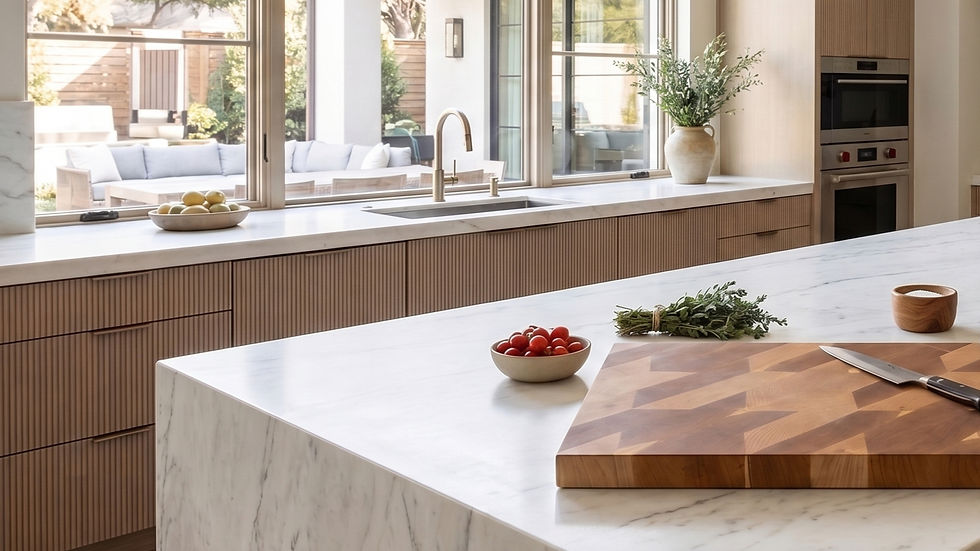
Why Biophilic Kitchen Design for Wellness is the New Standard in Luxury Living

The luxury kitchen of 2026 is defined by biophilic kitchen design for wellness that leverages high-performance natural materials to lower cortisol, stabilize heart rate variability, and provide tactile grounding within the home’s primary social hub. By prioritizing the physiological synergy between human biology and the cellular structure of hardwoods, modern design transcends mere aesthetics to become a foundational asset for health and longevity. This architectural shift establishes heirloom-quality craftsmanship as a therapeutic intervention, transforming the kitchen into a sanctuary of sensory luxury where wood is utilized as a vital tool for restorative living.
The Neuroscience of Wood: Why Biophilic Kitchen Design for Wellness Lowers Stress
The evolution of domestic spaces has reached a critical juncture where the sterile, high-gloss environments of the early 21st century are being replaced by materials that acknowledge the deep-seated evolutionary requirements of the human species. For over 99.9% of human history, the species existed in direct contact with natural environments, and the rapid shift to urbanized, artificial settings has resulted in a state of chronic physiological stress. This stress manifests as elevated sympathetic nervous activity, increased blood pressure, and heightened levels of stress hormones. In 2026, the movement known as Biophilic Design 2.0 focuses on nature as the literal blueprint for healthier living, moving beyond the simple placement of indoor plants to the creation of rooms designed entirely around materials and textures that promote mental well-being.
The kitchen, traditionally viewed as a workspace for culinary production, is now being reimagined as a central wellness engine. This shift is driven by a sophisticated understanding of how the environment influences the autonomic nervous system. Wood, as a primary material in this transition, offers more than visual warmth; it actively improves well-being by engaging multiple sensory pathways simultaneously. The rise of Quiet Luxury emphasizes this sensory comfort and emotional connection, prioritizing understated, high-quality materials over flashy, synthetic designs.
In the context of 2026 luxury design, the integration of wood is not merely a stylistic choice but a strategic one rooted in wood science and environmental psychology. The use of natural materials acts as a buffer against the high-performance, often high-stress nature of modern life. The kitchen becomes a space where the tactile experience of a wood surface or the subtle scent of phytoncides released from a natural oil finish provides a continuous, passive restorative effect for the inhabitants.
Design Metric | Traditional Modernist Kitchen (2000-2020) | Biophilic Luxury Kitchen (2026) |
Primary Material Focus | Synthetic resins, stainless steel, polished stone | Responsibly sourced hardwoods, natural oils, raw textures |
Physiological Goal | Visual cleanliness and efficiency | Cortisol reduction and parasympathetic activation |
Tactile Experience | Cold, inert, and non-responsive | Warm, tactile grounding, and organic feedback |
Atmospheric Impact | Low VOC focus (emission reduction) | Bio-positive focus (phytoncide enrichment) |
Longevity Model | Replaceable surfaces based on trend cycles | Heirloom stewardship and graceful aging |
The Neurology of Natural Materials: Brain Activity and Autonomic Response
The impact of wood on human physiology is measurable through several key indicators, most notably brain activity and the autonomic nervous system. Research utilizing near-infrared time-resolved spectroscopy (TRS) has clarified the physiological effects of touching wood with the palm compared to other materials. Tactile stimulation with wood has been shown to significantly decrease the oxyhemoglobin concentration in the prefrontal cortex. The prefrontal cortex is the region of the brain associated with complex cognitive behavior, personality expression, decision-making, and moderating social behavior; a reduction in oxyhemoglobin in this area indicates a calming of brain activity and a reduction in cognitive load.
This neurological calming is accompanied by a shift in autonomic nervous activity. Heart rate variability (HRV) serves as a critical indicator of this change. The high-frequency (HF) component of HRV reflects parasympathetic nervous activity, which is responsible for the rest-and-digest state. Conversely, the ratio of low-frequency to high-frequency components reflects sympathetic nervous activity, or the fight-or-flight response. Studies have demonstrated that contact with natural wood surfaces increases the natural logarithm of the HF component of HRV, signaling a robust induction of physiological relaxation.
Stimulus Material | Prefrontal Cortex Response (Oxy-Hb) | Autonomic Response (HRV-HF) | Physiological State |
Wood | Significant Decrease | Significant Increase | Physiological Relaxation |
Marble | No Significant Decrease | No Significant Change | Neutral/Alert |
Tile | Increase/Neutral | Decrease/Neutral | Potential Stress Induction |
Stainless Steel | Potential Increase | Decrease (Sympathetic Dominance) | Physiological Arousal |
This data suggests that the cold sterility of synthetic and inert surfaces like stainless steel and marble does more than just look clinical; it keeps the human body in a state of sustained physiological alertness. In a kitchen environment, where families gather and individuals seek respite after a day of high-stakes work, the presence of wood provides a necessary counterbalance to the stresses of the external world. The 2026 biophilic kitchen utilizes these findings to justify the extensive use of wooden islands, countertops, and cabinetry as a holistic wellness strategy.
Cortisol Reduction and the Science of Domestic Tranquility
The relationship between wood environments and stress hormones is perhaps the most compelling argument for the luxury biophilic kitchen. Cortisol, a steroid hormone produced by the adrenal glands, is the body’s primary stress signal. Chronic elevation of cortisol is linked to numerous health issues, including hypertension, impaired cognitive function, and a weakened immune system.
Empirical data from field experiments in various settings, including hospitals, offices, and residential spaces, indicates that exposure to wooden interiors consistently correlates with a drop in cortisol levels. For instance, a study conducted at a National Oncology Institute found that visitors in a wooden waiting room experienced a 7.5% decrease in cortisol compared to those in standard environments. Similar longitudinal studies in educational settings showed that students in wood-furnished classrooms had significantly lower stress levels and heart rates than their peers in rooms featuring linoleum and plasterboard.
Study Context | Wood Application | Primary Finding |
Hospital Waiting Room | Timber-finished walls and furniture | 7.5% reduction in cortisol |
High School Classroom | Solid wood furniture and paneling | Lowered heart rate and stress perception |
Residential Interior | 45% - 60% wood coverage | Optimal psychological stability |
Workplace/Office | Oak furniture and wooden desks | Cortisol reduction and productivity boost |
The mechanism behind this reduction involves the multisensory integration of wood’s visual, tactile, and olfactory properties. The human brain recognizes wood as a safe and natural material, which allows the hypothalamus-pituitary-adrenal (HPA) axis to de-escalate. In the 2026 kitchen, the strategic use of wood surfaces facilitates a passive, continuous reduction in systemic stress. This is particularly relevant in the transition from work-life to home-life, where the kitchen often serves as the threshold for relaxation.
The Chemistry of Wellness: Phytoncides and Indoor Air Quality
One of the most advanced aspects of biophilic design in 2026 is the recognition of wood as an active contributor to indoor air chemistry. Trees emit biogenic volatile organic compounds (BVOCs) called phytoncides to protect themselves from decay and pests. These compounds, which include terpenes such as alpha-pinene, beta-pinene, and delta-limonene, remain present in the cellular structure of harvested wood and continue to be released into the indoor environment.
Phytoncides have been shown to exert a profound effect on human immune function. Specifically, they enhance the activity and number of natural killer (NK) cells. A type of white blood cell that plays a critical role in the body’s defense against virally infected and tumor cells. Research has demonstrated that breathing in these compounds can increase NK activity for more than 30 days after the initial exposure.
Phytoncide Component | Natural Source | Human Health Benefit |
alpha-pinene | Pine, Cedar, Oak | Anti-inflammatory, stress reduction |
beta-pinene | Cypress, Sugi, Hiba | Immune system boost, anxiety reduction |
delta-limonene | Citrus, Wood resins | Mood enhancement, antioxidant properties |
Tannins | Oak, Walnut | Antimicrobial and antifungal protection |
The biophilic kitchen of 2026 leverages this forest bathing (shinrin-yoku) effect by utilizing wood finishes that allow for the continued emission of these beneficial compounds. Traditional polyurethane finishes act as a non-porous plastic seal, effectively trapping these compounds within the wood and preventing their therapeutic release. In contrast, the natural oil finishes favored by high-end craftsmen are breathable, allowing the kitchen to function as a therapeutic environment where the very air supports the inhabitant’s immune resilience and emotional balance.
Tactile Grounding and the Sensory Luxury of Wood
In the high-tech, digitally-saturated world of 2026, the sense of touch has become a vital gateway to mental health. Tactile grounding is a psychological technique that uses physical sensations to anchor the mind in the present moment, thereby interrupting cycles of anxiety and ruminative thought. Wood is uniquely suited for this purpose due to its complex texture and thermal properties.
Unlike metal or glass, which have high thermal conductivity and feel cold to the touch, wood is a natural insulator with low thermal conductivity. This ensures that wood surfaces remain close to skin temperature, providing a sensation of warmth and comfort that triggers the release of oxytocin, the love hormone, which promotes feelings of safety and social connection.
The Science of Texture Play
The psychology of tactile grounding suggests that different textures evoke different emotional responses. Smooth, polished wood surfaces create a sense of sophistication and cleanliness, while more textured or raw surfaces feel more organic and approachable. In the luxury kitchen, a curated mix of these textures can be used to balance energy and tranquility:
Smooth Surfaces: Ideal for food preparation areas where a sense of hygiene and precision is required.
Textured Grains: Perfect for social islands and gathering spots where a sense of connection and informality is desired.
The 2026 kitchen design focuses on sensory awareness, where the materials are chosen not just for how they look in a photograph, but for how they feel under the hand during a morning coffee or an evening meal. This tactile engagement helps quiet mental chatter and anchors the inhabitant in the here and now, making the kitchen a site of active mindfulness.
Visual Psychology: The Influence of Wood Grain Patterns
The visual impact of wood grain is not merely aesthetic; it is a form of visual nutrition that affects cognitive performance and mood. Research in environmental psychology has shown that looking at wood grain can increase brain activity in a way that fosters creativity and problem-solving. The rhythmic yet irregular nature of organic patterns found in wood mirrors the fractal geometries of nature, which the human eye is evolutionarily programmed to process with minimal effort.
Straight Grain vs. Cathedral Grain
The choice of grain pattern, determined by how the tree is cut, carries significant psychological weight.
Straight Grain (Radial Cut): This pattern features long, parallel lines that create a sense of order, stability, and tranquility. It is psychologically associated with reliability and calm focus, making it ideal for workspaces where concentration is paramount.
Cathedral Grain (Tangential Cut): Characterized by prominent, arch-like patterns, cathedral grain adds a sense of grandeur, elegance, and movement. These patterns are more visually dynamic and can stimulate creativity and social engagement, making them a popular choice for large focal points like central kitchen islands.
Grain Pattern | Cutting Method | Psychological Association | Structural Benefit |
Straight Grain | Radial Section | Stability, order, reliability | Highest dimensional stability |
Cathedral Grain | Tangential Section | Grandeur, creativity, visual interest | High decorative value |
Wavy/Spiral Grain | Helical Growth | Movement, natural rhythm, energy | Unique aesthetic character |
Birdseye/Tight Grain | Specialized Growth | Refinement, luxury, attention to detail | Dense and durable |
By understanding the hidden psychology of these patterns, a master craftsman can curate a kitchen environment that subtly directs the mood of the space. For example, a backsplash featuring straight-grain oak can promote a sense of groundedness during meal prep, while a cathedral-grain walnut island can act as a catalyst for creative conversation during dinner parties.
The Microbial Frontier: Wood Science and Kitchen Hygiene
A persistent myth in kitchen design is that synthetic, non-porous surfaces are more hygienic than wood. However, wood science provides a robust rebuttal to this notion. Hardwoods like Oak, Walnut, and Cherry possess natural antimicrobial properties that make them safer for food contact than plastic or stainless steel in many circumstances.
Mechanisms of Wood Antimicrobial Action
The antimicrobial efficacy of wood is the result of three primary factors:
Chemical Defense: Many hardwoods contain natural compounds such as tannins and resins that are toxic to bacteria and fungi. Oak, for instance, has a high percentage of tannins that act as powerful antimicrobial agents.
Physical Desiccation: Wood is hygroscopic, meaning it naturally absorbs moisture. When bacteria land on a wood surface, the wood’s porous structure draws moisture away from the microbes. Without water, the bacteria cannot survive or multiply.
Encapsulation: Unlike plastic, where bacteria can accumulate and multiply in deep knife marks, wood fibers tend to encapsulate and isolate microorganisms, trapping them within the wood structure where they eventually die due to lack of nutrients and desiccation.
Surface Material | Bacterial Survival Rate | Mechanism of Action | Hygiene Reality |
Oak Wood | Low (Rapid Reduction) | Chemical tannins + physical desiccation | Safest for long-term food contact |
Walnut Wood | Low | Phenolic compounds + porous structure | Naturally antimicrobial and aesthetic |
Plastic/Resin | High (in scratches) | No active defense; moisture retention | Bacteria hide and multiply in cuts |
Stainless Steel | Moderate | Surface-only; no active inhibition | Requires frequent chemical disinfection |
In a 2020 study, it was found that coronaviruses (SARS-CoV-2) on wooden surfaces only remained replicable for 12 hours, compared to up to 96 hours on plastic, stainless steel, and glass. This data repositioned wood as a superior material for the high-traffic, multi-user environment of a modern family kitchen.
Surface Science: The Case for Natural Oil Finishes
The finishing of wood is perhaps the most critical technical decision in biophilic design. In North America, polyurethane has been the default finish for decades due to its durability. However, polyurethane is essentially a plastic coating that creates a non-porous barrier over the wood. For a kitchen to be truly biophilic and therapeutic, this barrier must be removed.
Polyurethane vs. Natural Oil Finishes
High-end brands like Key Home Goods prioritize natural oil and wax oil finishes for several technical and health-related reasons:
Tactile and Olfactory Connection: Natural oils penetrate the wood fibers rather than sitting on top of them. This leaves the natural texture of the wood exposed to the touch and allows for the emission of beneficial phytoncides.
Breathability and Moisture Regulation: Wood is a living material that regulates indoor humidity. A breathable oil finish allows the wood to continue absorbing and releasing moisture, which helps stabilize the indoor climate and reduce the presence of airborne allergens.
Longevity and Reparability: Polyurethane finishes are difficult to repair locally; once the surface is scratched or worn, the entire piece must often be sanded and refinished. Natural oils are easily repairable through spot application, allowing the wood to develop a beautiful patina over time rather than simply degrading.
Feature | Polyurethane Finish | Natural Oil Finish |
Protection Type | Surface Film (Plastic Layer) | Penetrating Protectant |
Appearance | Glossy to Matte (often looks "sealed") | Ultra-Matte, Organic, Natural |
Maintenance | Set-it-and-forget-it (until failure) | Periodic re-oiling |
Repair | Requires full professional sand/refinish | Easy DIY maintenance |
VOC Profile | High VOCs (during application/curing) | Low to zero VOCs; eco-friendly |
For the 2026 luxury standard, the choice is clear: natural oils honor the stewardship of the material and the health of the inhabitant. By selecting finishes that enhance rather than obscure the wood's properties, designers create a space that feels alive and supportive of the body’s natural rhythms.
Sensory Luxury in Practice
In 2026, Biophilic Design 2.0 is defined as the strategic integration of natural materials, specifically hardwoods, to act as a biological blueprint for mental well-being. In this context, the kitchen is no longer a collection of cabinets and appliances; it is a curated sensory experience.
Acoustic Comfort and Stress Reduction
A significant but often overlooked stressor in kitchens is noise. Hard surfaces like tile and quartz reflect sound, creating a chaotic auditory environment that can increase heart rate and anxiety. Wood is a natural acoustic material with sound-absorbing properties. By integrating wooden acoustic panels or substantial solid-wood casework, designers can create a peacefully quiet space that promotes relaxation and focus during meal preparation.
The Color Palette of 2026
The aesthetic trend for 2026 shifts away from millennial grey toward a palette that evokes the earth:
Moss Greens and Calming Dusk Blues: Used to create a cooling, restorative atmosphere.
Sandy Clay and Terracotta: Nostalgic, grounded hues that provide a sense of warmth and security.
Deep Rich Accents: Dark walnuts or ebonized oaks used as punctuation marks to add definition and visual weight to the space.
This sensory-rich environment is designed to support the occupant's lifestyle, with adaptable functionality that allows the kitchen to transition seamlessly from a high-performance culinary workspace to a meditative social retreat.
The Future of Domestic Longevity
The biophilic kitchen of 2026 represents the ultimate synthesis of human health, ecological stewardship, and high-end craftsmanship. As our understanding of the physiological impact of our built environment deepens, the role of natural materials like wood moves from the decorative to the essential. By strategically utilizing specific grain patterns, natural oil finishes, and the innate antimicrobial power of hardwoods, we can create domestic spaces that do more than just house us. They heal us.
The transition toward sensory luxury and tactile grounding is not merely a trend; it is a return to an evolutionary baseline. In an era of increasing digital fatigue and environmental stress, the wooden kitchen serves as a vital sanctuary. A place where the warmth of the grain and the scent of the forest provide a constant, quiet reminder of our connection to the living world. Through the expert guidance of craftsmen like Andrew Key and the rigorous application of wood science, the luxury home of the future is finally being built on a foundation of genuine wellbeing.
Frequently Asked Questions
The following table addresses common inquiries from architects, designers, and homeowners regarding the technical integration of wood in wellness-focused kitchens.
Question | Answer |
How does wood contribute to cortisol reduction? | Wood exposure activates the parasympathetic nervous system, which governs the rest-and-digest response. This shift from sympathetic to parasympathetic dominance results in lower systemic cortisol levels and stabilized heart rate. |
Are wooden cutting boards actually safer than plastic? | Yes. Wood’s porous structure desiccates (dries out) bacteria, while natural tannins in species like Oak actively inhibit microbial growth. Plastic provides no such defense, and bacteria can multiply in knife scars. |
What is Tactile Grounding in a design context? | It is the use of natural, warm-touch textures to anchor the user in the present moment. This sensory interaction can interrupt anxiety cycles and promote cognitive recovery. |
Do all wood finishes allow for phytoncide emission? | No. Traditional polyurethane creates a plastic film that seals the wood. Natural oil finishes are breathable, allowing therapeutic phytoncides and humidity-regulating properties to benefit the indoor air quality. |
About the Author
Andrew Key is a master craftsman and the visionary founder of Key Home Goods, located in the heart of Heath, Texas. With a seven-year tenure dedicated to the mastery of high-end wood craftsmanship, Andrew has established himself as a subject matter expert in the specialized fields of wood science and biophilic design. His work is characterized by a deep commitment to the stewardship of natural materials, ensuring that every piece is heirloom-quality and serves as both a functional tool and a restorative asset for the home.
Andrew’s technical expertise includes a nuanced understanding of moisture equilibrium, a critical factor in the longevity of high-performance cutting boards, and the complex antimicrobial properties of North American hardwoods. By combining traditional joinery techniques with modern research on sensory luxury and cortisol reduction, he creates products that prioritize the long-term health and emotional stability of his clients. At Key Home Goods, the mission is clear: to reconnect the modern inhabitant with the profound, healing power of the natural world through the medium of expertly crafted wood.